
About the Author
Dr. Liu Wei, R&D Director at Ruifengyuan Stone
PhD in Materials Science with specialization in stone fabrication technology. Developed hybrid production workflows combining traditional carving and CNC automation for 180+ architectural projects. Published research on tool wear patterns in stone machining in the Journal of Materials Processing Technology.
TL;DR Key Takeaways
- Natural stone in restaurant interiors influences guest perception of food quality and establishment prestige
- Floor medallions, wall cladding, and bar tops each require different stone properties for commercial food environments
- Porosity, stain resistance, and slip coefficient are critical selection criteria for restaurant stone applications
- Sealing and maintenance protocols differ significantly between front-of-house and kitchen-adjacent installations
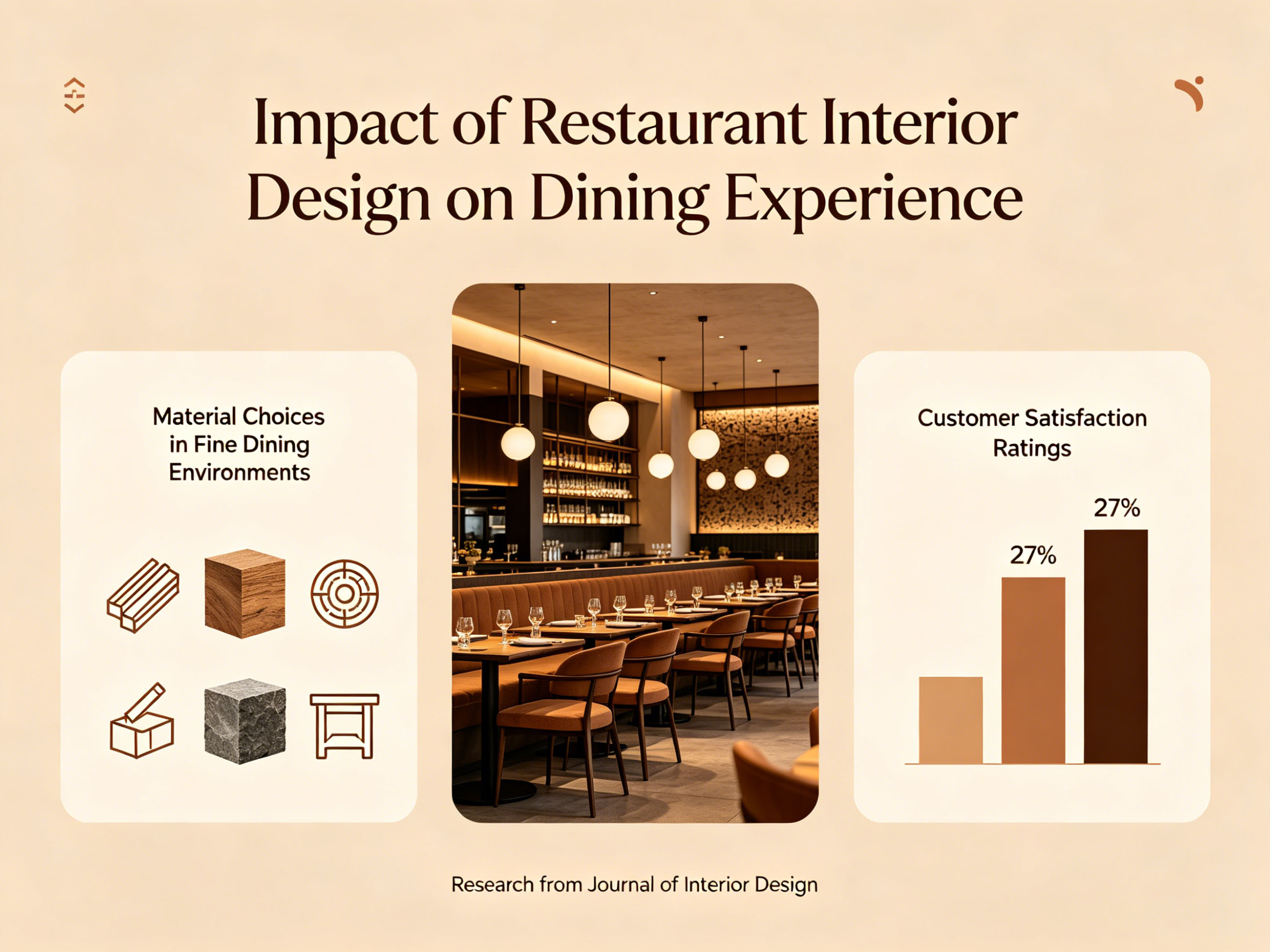
Restaurant interior design directly influences how guests perceive food quality and overall dining experience. Research published in the Journal of Interior Design indicates that material choices in fine dining environments affect customer satisfaction ratings by up to 27%. Natural stone plays a central role in shaping this atmosphere, from the moment guests step onto a marble entry medallion to the stone bar top where cocktails are served.
Stone Flooring as the Foundation of Restaurant Atmosphere
The restaurant floor is the largest continuous surface in the dining room and sets the visual tone for the entire space. Marble and limestone flooring in high-end restaurants creates an immediate impression of permanence and quality. For fine dining establishments, natural stone waterjet medallions at entryways serve as focal points that anchor the design concept.
Commercial kitchen-adjacent areas demand different stone characteristics. The National Sanitation Foundation (NSF) guidelines for food-contact surfaces recommend materials with water absorption below 0.5%. Granite and dense basalt meet this threshold, making them suitable for bar service areas and open kitchen surrounds. Limestone, while visually striking, requires more frequent sealing in zones exposed to food and beverage spills.
Slip resistance is a critical safety consideration in restaurant environments. The Americans with Disabilities Act (ADA) recommends a minimum coefficient of friction of 0.6 for commercial floor surfaces. Honed and leathered stone finishes provide better traction than polished surfaces, reducing liability risks in high-traffic dining areas.
Stone Wall Cladding for Visual Impact
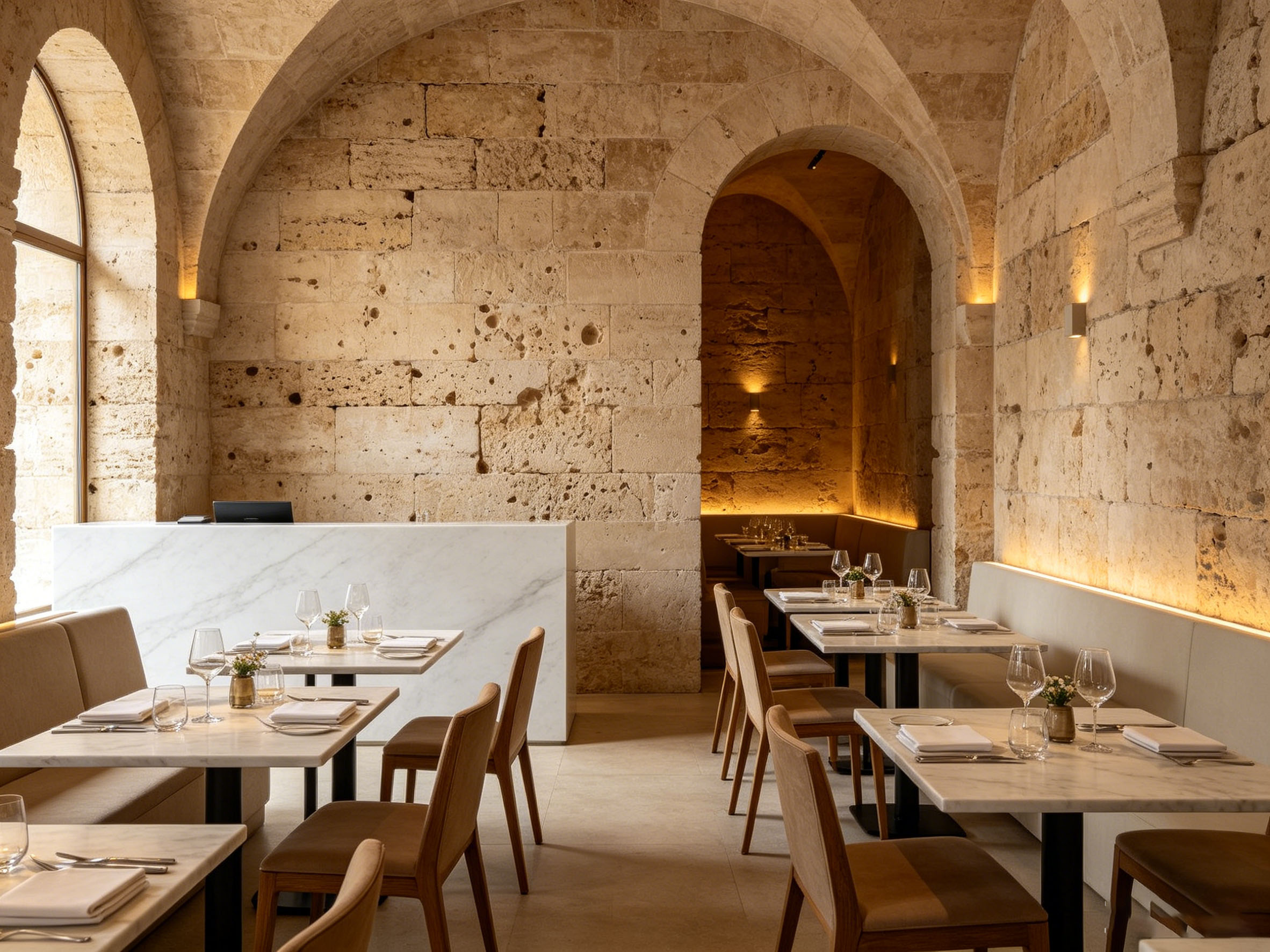
Feature walls clad in natural stone create depth and texture that paint or wallpaper cannot replicate. In restaurant settings, stone wall cladding behind host stands, along bar backs, and in private dining rooms establishes visual hierarchy. Travertine with its natural pitting and veining adds Old World character, while white marble creates clean, contemporary lines.
The Natural Stone Institute provides specification guidelines for stone wall cladding in commercial applications, including minimum thickness requirements and anchoring system recommendations. For restaurant walls subject to steam and grease from open kitchens, sealed granite or quartzite outperforms more porous limestone.
Bar Tops and Table Surfaces: Where Stone Meets Daily Use
Bar tops face the most demanding conditions in restaurant stone applications. Daily exposure to alcohol, citrus, oils, and repeated cleaning requires materials with high stain resistance and hardness. Granite bar tops with polished or leached finishes withstand commercial cleaning chemicals without etching. Marble, while elegant, is more susceptible to acid damage from wine and citrus, requiring faster wipe-down protocols and frequent resealing.
Tabletop stone selection involves balancing weight, durability, and aesthetics. Thinner stone slabs (12–15mm) bonded to honeycomb aluminum backing reduce table weight while maintaining surface integrity. This construction technique, commonly used in composite stone solutions, allows larger table formats without structural concerns.
Stone Selection by Restaurant Zone
Different zones within a restaurant demand different stone properties. Entry and lobby areas benefit from dramatic marble medallions and polished stone that create a strong first impression. Main dining floors require durable, stain-resistant stone with slip-resistant finishes. Bar areas need materials that withstand alcohol and citrus without etching. Restroom areas demand fully sealed, non-porous stone that meets hygiene standards.
The US Geological Survey mineral commodity summaries indicate that dimension stone consumption in commercial construction has grown steadily, reflecting increased specification of natural stone in hospitality environments. Proper zone-based selection ensures each area performs optimally for its specific use conditions.
Maintenance and Longevity in Commercial Settings
Restaurant stone maintenance differs significantly from residential care. Commercial cleaners, higher traffic volumes, and food-related staining require more rigorous maintenance protocols. Daily cleaning with pH-neutral stone-safe cleaners, immediate spill response, and monthly inspection of sealed surfaces prevent long-term degradation.
Natural stone slab selections for restaurant use should factor in maintenance access. Wall cladding and bar tops that are difficult to reach for resealing need different material choices than easily accessible floor surfaces. Professional restoration every 12–18 months maintains appearance in high-end dining environments.
Integrating Stone with Lighting and Acoustics
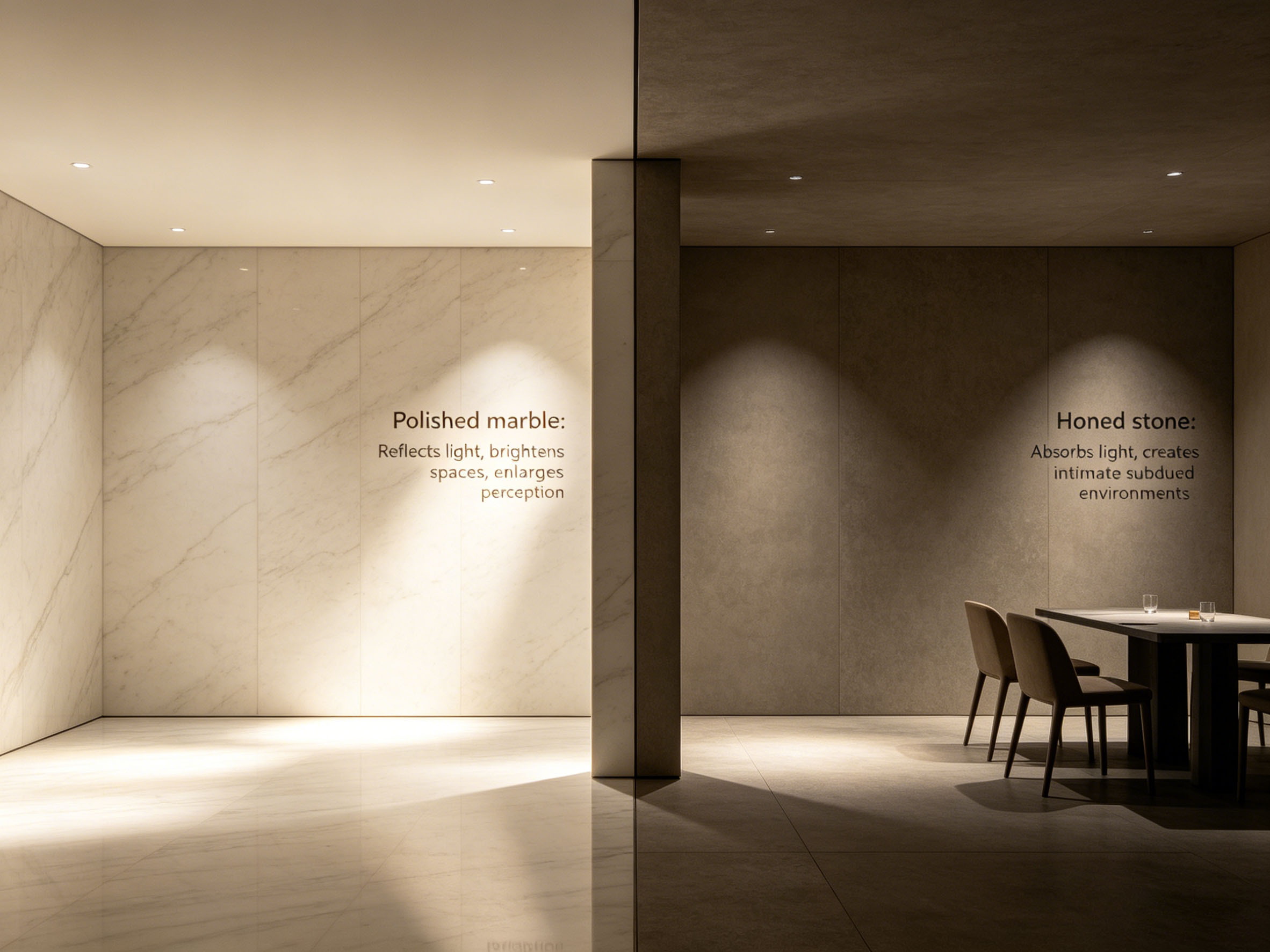
Stone surfaces interact with restaurant lighting and acoustics in ways that affect dining atmosphere. Polished marble reflects light, brightening spaces and making them feel larger. Honed stone absorbs more light, creating intimate, subdued environments suitable for fine dining. Similarly, stone surfaces reflect sound, which can increase ambient noise levels. Strategic placement of acoustic panels and soft furnishings balances the natural sound-reflecting properties of stone.
The Illuminating Engineering Society recommends 30–50 foot-candles at table surfaces for fine dining, with accent lighting at 5–10 times ambient levels on feature stone walls. This lighting strategy draws attention to stone surfaces while maintaining appropriate dining illumination.
Frequently Asked Questions
What type of stone is best for high-traffic restaurant floors?
Granite and dense quartzite with honed or leathered finishes offer the best combination of durability and slip resistance. These materials resist staining from food and beverage spills and withstand frequent commercial cleaning. Polished marble is less suitable for high-traffic areas due to slip concerns and etching susceptibility.
How often should restaurant stone surfaces be sealed?
Floor surfaces in restaurant dining areas typically require sealing every 6–12 months depending on traffic volume. Bar tops and food-contact surfaces benefit from sealing every 3–6 months. Always use commercial-grade, food-safe sealers. A simple water bead test confirms when resealing is needed.
Is marble suitable for restaurant bar tops?
Marble bar tops require careful maintenance due to acid sensitivity. Wine, citrus, and vinegar-based dressings can etch polished marble surfaces within minutes. Darker marbles and those with heavier veining disguise etching better than white varieties. Granite or quartzite bar tops are lower-maintenance alternatives.
Can stone medallions be installed in existing restaurant floors?
Stone medallions can be installed during floor renovation by cutting out the existing flooring and setting the medallion into a prepared substrate. The surrounding floor must be removed to the correct depth to ensure the medallion sits flush. Professional installation is essential for proper alignment and grouting.
Does restaurant stone need different finishes for front-of-house versus kitchen areas?
Front-of-house areas benefit from honed or light-leathered finishes that balance aesthetics with slip resistance. Kitchen and bar service areas need denser finishes with lower porosity. Polished finishes should be limited to vertical surfaces and low-traffic decorative areas in restaurant environments.
How does stone choice affect restaurant noise levels?
Stone surfaces reflect sound, potentially increasing ambient noise by 5–10 decibels in fully stone-clad spaces. Combining stone flooring with acoustic ceiling tiles and upholstered seating creates balanced acoustics. Area rugs over stone medallions in private dining rooms reduce echo while preserving the visual impact.
External References: Natural Stone Institute | US Geological Survey | NSF International
Post time: Jun-15-2026